Showing posts with label general rpg. Show all posts

Wednesday, February 9, 2022

"Clever" Character Names Often...Aren't

If you've been a gamer for very long, you've probably come across quite a few players who have named their heroes after characters from literature, TV, or film--and likely been guilty of it yourself at some point! Many players, both old and new, are prone to obsessively recreating their favorite heroes as faithfully as they can with any new RPG's rules set they try out. For a host of reasons (inexperience with the rules, strict power caps on starting characters, clashing opinions about the character within the player group, etc.) many end up frustrated when it doesn't work out to their satisfaction. And along the way, they often end up annoying their fellow players with their presumption. ("Oh, sure, you're Alannon. And what level are you again?"*)

One problem with trying to slavishly copy a fictional character is that you're not experiencing the full range of characters in the game. If you're hung up on the idea that your wizard has to be an old, mysterious know-it-all, just like Merlin, or Gandalf, or Elminster, then you'll miss out on all the other ways to play the class. And no matter how awesome those characters might be in their original settings, they might be a very poor fit for the campaign you've joined. Especially if you want to play the world's most powerful arch-mage, when you've joined a game that starts at 1st level! Instead, give some thought to playing the new kid on the block, who someday hopes to rub shoulders with those legends, and show us all how to do things differently than the predictable tropes of characters everyone knows.

There are times when it can be appropriate to use a name that copies that of an established fictional character, or that is a clever take-off of one. For example, players and GMs tend to be less strict about setting-appropriate names for one-shots or less serious games--and in deliberately silly games, anything goes, the punnier, the better. Less obvious homages can work in more serious games, particularly when the name or character are on the obscure side, and when the character is much more inspired by a fictional hero than based on one. 

In my own games, I do put up with a certain amount of silliness in names, because my players are there primarily to have fun, and to blow off steam from their busy lives. Their jokes are part of the price, and the joy, of having a loyal group of friends to game with. So, for example, my Pathfinder games have  featured animal companions and familiars named for Pokemon or dirty puns. If I ever tried to tackle a more historical game, I'd probably put more effort into policing names, but I'm also not sure that's really this group's kind of game in the first place.

Organized play is very much a crap-shoot when it comes to character names. For every serious, fantastic name that helps build immersion in the world, you'll have a Barbarella, a Harley Davidson, or  a Herlock Sholmes.**

In all fairness, I'll admit that not all of my Pathfinder Society and Starfinder Society characters' names are entirely serious:

  • I named my tengu cavalier "K'Chaw" as a joke, and only gave her a "real" birth name, and a story explaining the nickname, after playing her for a few levels. 
  • My kitsune hunter/rogue is named Mumbly Peg, after the "game" played with knives. She usually just goes by "Peg," so her full name rarely, if ever, gets any comments.
  • Nar-Lok, my creepy heavens shaman, gets his name from the Loc-Nar in the movie Heavy Metal.
  • My kiirinta (a moth-like fey species) mystic is named Tekeli-li, after the sound that the shoggoth makes at the end of At the Mountains of Madness (which Lovecraft lifted from the giant albino penguins in Poe's The Narrative of Arthur Gordon Pym).
  • My gnome envoy and musician is Toknomonicon, which was never meant to be anything more than a random mouthful of syllables. But once I had worked out that much, of course he had to be known for doing "Tokno remixes."
My mindblade magus, Cassilda Tillinghast, has a much more serious name, but it's still ultimately a pair of Cthulhu Mythos references. The surname comes from a past Buffy/Angel RPG character of mine, Patricia "Trick" Tillinghast, upon whom Cassilda was very loosely based. This surname was used by Lovecraft for the scientist in his short story, "From Beyond," because it was a historical New England family name. Because the game I played in was set in New England as well, I drew heavily on Lovecraft for my PCs' and their relatives' names (Trick's cousin is an Olmstead descended from Gilmans and Marshes, for example). The name Cassilda comes from Robert Chambers' "The King in Yellow" stories, where she is a central character in the cursed play that gives the cycle its name. I liked the sound of it, and it's obscure enough that you would need to have read Chambers or have played certain Yellow King-themed adventures (such as one of the later books of the Strange Aeons Adventure Path) to recognize it. Nobody who has seen me play my Cassilda has ever hinted at knowing anything about the other one yet. 

This is the kind of literary name that I like best: it alludes to a work of fiction, without copying any particular character too much (if at all). It's a cool name that stands on its own, with or without any explanation of its origin. And there's very little if any of that "Hey, see what I did there?" nudging and winking that the names that started me on this rant are shamelessly guilty of.

-----

* True story: One of the players in my college AD&D campaign named his wizard Alannon. I hadn't read any of the Shannara books at that point, but my roommate had, so he gave the the wizard's player serious side-eye for his choice of name. I let the player keep the name, but my roommate loved to rib him whenever "Alannon" spectacularly failed at an attempt to do something impressive.

** Real examples of character names I've encountered online, just in the past month or two!

Wednesday, October 30, 2019

Fallicon cometh...

I've never been a dedicated convention-goer. When I was a high-school and college student (back in the ancient days of AD&D 1st and 2nd edition), I dreamed of someday going to GenCon, but never had the money for such a trip. SF conventions intrigued me, too, but never quite to the same extent.

I didn't attend my first convention, for any fandom, until my early 20s. Shortly after moving to Boston for graduate school, I made a new friend at a temp job who was active on committees for Arisia, a speculative fiction con in Boston. He was thrilled to have another F&SF nerd to chatter with, however briefly, during our daily drudge. The con was coming up very soon, so he offered me one of his spare complimentary tickets. It was great fun--particularly meeting a couple of artists whose work I admired--and I attended the next couple of years on his comp tickets, too. (I'm embarrassed to admit that I can't recall that generous gentleman's name anymore. Tony, I think?)

By that time, I had found the Boston-area LARP community, and my interest in Arisia waned (though I played my first LARP at an Arisia). That's also around the time that I met and started dating my future wife, Erika. LARPing was one of our many shared interests. We attended an all-LARP convention, InterCon, for a few years running, as well as the very first couple of Vericons (a gaming convention at Harvard). But then impending parenthood diverted too much of our time and money to continue LARPing regularly. We attended once (for a single day, I believe?) when the kids were very little, and one last time (for the full con) when they were in early grade school.

In 2003, GenCon moved from Milwaukee to Indianapolis, which was only an hour from my childhood home (where my mother still lives). I had been living in Boston for a decade at that point, which still made the con an expensive trip. In 2011, we combined a family visit with my long-awaited first time attending GenCon. (Erika and the kids--now 6 and 7--came on a family day pass that Sunday.) I played many, many games (including the Iron GM competition, as a player), met some of my favorite game designers (including Steve Jackson and the core staff of Green Ronin, both of whom I had done some freelance work for by that time), and generally reveled in the spectacle of games, cosplay, and art.

Despite moving to Kentucky a couple years later--only half a day's drive from Indy--I still haven't managed to get back to GenCon again. Much of the reason is financial, but there is also the awkwardness of my kids' school year starting earlier here than in Boston--many years, it's been the very same week as the con.

However, I have found some consolation recently by learning more about local game conventions here in Lexington. This past spring, all four of us attended Lexicon, a weekend gaming convention with a robust Paizo gaming track. (We were talked into going--and Erika into GMing a few scenarios--by friends we'd made through Pathfinder Society.) Unlike some bigger cons we're been urged to try (like CincyCon in Cincinnati), Lexicon was close enough to drive home each night, which made it surprisingly affordable.

This coming weekend (November 1-3) is Fallicon, a PFS charity event for Extra Life. This year it's being hosted by our Friendly Local Gaming Store, D20 Hobbies--a mere 15-20 minute drive from our home. Erika is helping to organize it, and is GMing a few games. I will also be running my very first tabletop RPG at a con this weekend--which will also be my first time GMing Starfinder. The kids game just about as regularly as we do these days, so they are both very excited, too. We've been scrambling the last few days to make sure all the characters they intend to play are fully updated, and Erika and I have been doing GM prep (her far more than me, though I'm also supplying maps for her and some other GMs). My daughter even designed an adorable goblin sticker for donors to the raffle.

But someday--someday--I will make it back to GenCon...

Thursday, August 22, 2019

My GM Pet Peeves, and How to Not be THAT Player

Earlier this week, the inestimable Owen K.C Stephens asked his Facebook followers, "What is ONE thing someone else in a game group you play with regularly, be they a GM or player, does that makes things less fun for you, but that for some reason you can't or won't mention to them?"

I immediately thought of several things that bother me during play, both as a player and a GM, but I tend to avoid confronting the other player about them. Doing so can potentially lead to a bigger disruption of the game than the bad behavior. However, not doing anything to curb those annoying habits might mean that your (and the other players') dissatisfaction and resentment continues to fester unchecked, which isn't healthy, either.

I've decided to present a handful of my personal pet peeves here, and--more importantly--try to give some advice for how to avoid being guilty of them yourself. I encounter these issues far more often in organized play than in home games. The latter gives more control over who you play with, so it's usually easier to avoid the players who set you off. But even in a group you've been with for some time, and are very comfortable with, you'll want to stay alert for these behaviors. 

The player who doesn't know what their character's go-to attack and skill modifiers are, or where to find them on the character sheet, even after playing the character for quite some time.


Your GM has many characters to keep track of, while you just have the one (and maybe a companion). Therefore, you, not your GM, should be responsible for being the expert on what your PC can do. At the very least, you need to know what your modifiers are for the activities your character will engage in most often--whether that's your signature attack, your best noncombat skill, or just what your Perception and Initiative modifiers are. 

Naturally, players who are new to the system, or to RPGs in general, should be cut some slack here. But once you've played a character for a while, you should be ready and able to answer the GM's most common questions about their stats. And yes, those numbers will constantly change as you advance in level and acquire better gear, but you still need to be able to find them quickly on your character sheet in order to keep the game moving along at a reasonable pace.


The player who has to be reminded of a basic rule that directly impacts their character's options, every single fight, week after week.


This peeve is very closely related to the last one, but involves more general knowledge and mastery of the rules. If your GM has to keep reminding you week after week that you can only attack once after moving more than 5 ft., or that you can't combine a standard action (like Vital Strike) with a charge, or that trying to shoot someone adjacent to you provokes attacks of opportunity, it will get old fast. Invest just a little more time in learning the rules, and everyone at the table will have more fun.

Ideally, everyone should possess their own copy of the rulebook and have a working knowledge of how to find a rule they need, even if they haven't read the entire text. (I don't hold other people to my own practice of reading RPG rulebooks from cover to cover...as much as I might sometimes wish they would.) Review the rules that affect your character most often until you start to internalize them. For example, Pathfinder's action economy of standard, move, swift, immediate, and full-round actions can be one of the more confusing parts of the game, but it's also one of the basic rules elements that everyone needs to learn in order to attain any degree of mastery of that system. 

The player who built their character around a single killer combo, but then can't explain clearly how it works, or how they calculated the bonuses they're claiming. 


It comes with the territory of a crunchy system like Pathfinder that part of the appeal is optimizing a character to do one or two things really, really well. Exploiting the rules to the fullest requires a broad knowledge of all the resources available for the game, which requires a significant investment of time and money to acquire those books, to study them, and to experiment with new combinations. Your awesome new build may be perfectly legal, by both the letter and the spirit of the rules, but if you can't clearly explain it works--or how in the heck you got such a surprisingly large attack or damage bonus--then the GM and other players will quickly lose patience with your shenanigans. 

I've found this to be a chronic problem in organized play, especially among players who rely too heavily on a program like Hero Lab to build their characters. Hero Lab is a wonderful tool--I use it all the time myself--but it's far too tempting to use it as a crutch for actually reading the rules. It doesn't contain the full text of every rule it employs, it doesn't always tell you where all the numbers come from, and it is far from error-free. Organized play campaigns usually have strict rules about owning a sourcebook in order to use its content, and a Hero Lab data package does not count  for that. In addition, not all players have the time, funds, or inclination to acquire a library as large as yours might be, so you will occasionally get a GM who has never read the book(s) your character relies on for their core concept. If you can't adequately and efficiently explain that unfamiliar content to them--or can't account for each part of that surprisingly large bonus you just claimed--your GM will get frustrated with your poor grasp of the rules. They may even suspect you of cheating. Pathfinder Society has an audit process that GMs can invoke if they suspect cheating, but they don't do this lightly because it wastes valuable play time, and ruins the fun for everyone at the table. But if one player is stopping play frequently to fumble over explaining how their bizarro character is supposed to work, that still wastes the other players' time, and their goodwill. 

The best way to avoid annoying GMs in this way is to carefully review the rules for your character until you can quickly and concisely explain how their abilities work. Be prepared to show the GM the original rules text if they request it, and to account for all your math in calculating your bonuses. If your character will be consistently creating effects that help allies or hinder enemies, be able to recite those effects quickly and clearly. Better yet, copy the pertinent details onto index cards that you and the other players can use for easy reference at the table. If you make a good-faith effort to keep your PC's unusual game mechanics from becoming a burden on the GM, they will be much happier about having you at the table! (Or, if those rules are overly burdensome on you, then you may wish to rethink whether you can actually play that character effectively.)

The player who doesn't pay attention to the game except when it's their turn, so the rest of us have to waste a lot of time telling them what's happened since their last turn. 


Almost nothing irritates a GM more than being ignored, yet players constantly engage in pointless table chatter, playing games or surfing social media on their phones, and many other distractions. The worst offenders have to be yanked back to attention when it's their turn, then have the entire past round since their last turn explained to them, and immediately lose interest again as soon as their turn is over. They also never look at the [bleep]ing map to see where their character is in relation to their allies or enemies, which means they waste even more time deciding what to do on their turn.

(I should pause here to confess that I'm as guilty of off-topic chatter as any of my players, but that's a very minor offense compared to the sheer stubborn obliviousness of some people I've played with.)

I've considered banning phone use entirely at my table, but I'm afraid that would ultimately hurt the game more than help. The internet is often the easiest and fastest way to look up a rule, and some players keep all their character sheets and rulebooks on their phones. I also like to take pictures of cool maps and miniatures during games that I play or run, and I appreciate others wanting to do the same. But lingering on social media for longer than it takes to post those game photos, or playing games completely unrelated to the one we've all gathered for, tends to erode my patience very quickly--especially if the player is distracting others with their antics.

I understand that some players focus better if they have something to do with their hands when they're not taking notes or rolling dice. I have many friends who cross-stitch, or knit, or draw during game. I don't have a problem with that, as long as they are paying enough attention to know when they need to pause their project to take their turn, or roll a save, or otherwise react to what's going on in game. But if your crafty thing is too noisy or takes up too much table space, or if it takes effort to get your attention when I need it, then we have a problem.

Ultimately, I see this as an issue of mutual respect and common courtesy. If spending time with these people and playing this game is important to you, then show that through your actions. Pay attention, and practice active listening. Use the other players' turns to think about your next turn, so that you'll need less time to deliberate over your actions then. If the group wanders off topic, help the GM nudge them back on target, rather than providing yet another tangent. 

Tuesday, May 14, 2019

Roleplaying games as sandwiches

While enjoying my latest meal delivered by my favorite bakery-and-sandwiches place, I was struck by the idea of comparing role-playing game systems to sandwiches. (Yes, I was very hungry!)

The bread is the game mechanics of the RPG; it's what holds the rest in place and lets you get a solid grip on the game in order to consume it. Sometimes it's bland and serviceable, while other times it provides a satisfying flavor or crunch all on its own. Some bread is good and solid, and holds the whole sandwich together neatly. But the more things you stuff into the sandwich, the greater the chance of it falling apart and making a mess before you can finish it. However, there are some sandwiches--and games--that taste so good that when they get messy, you just pick up the pieces and keep going because you don't want to miss any of the good stuff. (I'm tempted to say that a universal system is like a wrap, because it can hold whatever you want it to--within reason. And making your rules too dense and arcane to be comprehensible is like using bread that's too thick or hard to bite and chew.)

The protein is the core activity of the game; it's the part that defines the whole (e.g., a peanut butter sandwich, a hamburger; dungeon crawling, spycraft). Naturally, some games are meatier and more fulfilling than others, and some have more variety within their core activities.

All of the other ingredients are the elements that combine to give the game its unique flavor. Some are common to most games withinn a given genre or subgenre (such as the tropes that many fantasy RPGs inherited from D&D). You could think of these as the most popular condiments. Others are rarely seen outside of a handful of games. Maybe they only work well with a few other specific ingredients, maybe they require a bigger investment to acquire, prepare, and consume, or maybe they're very much an acquired taste. Some ingredients may be considered strictly optional, either by design or by common practice (hold the pickles; ignore the critical fumbles rules).

The overall size of the sandwich indicates how much effort it takes to prepare for and/or consume the game. A slim, simple game may be great when you don't have a lot of time to prep or play, or just want to savor one or two favorite ingredients by themselves. A larger, more complex game will have more parts, which will take more time to assemble, to discover how the various flavors interact, and to chew your way through the whole thing. (And if your game is the equivalent of a dagwood sandwich, you'd better have a LOT of time on your hands--not to mention a good memory and plenty of napkins!)

There are some sandwich aficionados who insist on a strict structure for how to assemble all the ingredients, and sneer at what they consider less perfect creations. Similarly, some gamers will loudly criticize a game for not meeting their own biased expectations. But just because you don't like how a sandwich is made, that doesn't necessarily mean that it's an awful sandwich, or that other people won't like it (or even love it). It's just not to your taste. If there is something you don't like about a sandwich, feel free to change it, or put together something entirely new. Some changes may be off-putting to others, which could make it harder to find people willing to sample your latest experiment--or you might get very lucky and hit upon the next hot trend.

Bon appetit!

Thursday, August 30, 2018

How do you go about creating a character for play?

Nefereanu, my Osiriani oread brawler/living monolith (and his embiggened form)
I recently came across an old thread on the Paizo Messageboards titled "How do you go about creating a character for play?" The original poster wanted to know whether other players started with a optimized build, a purely character-driven concept, random rolls, GM assignment, or some other method. My own answer would have to be that I don't have a single method; I have created player characters using a wide variety of starting points. That's hardly a satisfying answer by itself, so I'll give several examples.

First, I should mention that during my 30+ years as a RPG player, I have GMed about as much as I've played as a PC, and that influences my choices as well. I get frequent opportunities to try out new character ideas as NPCs in games that I run, and I enjoy a wide diversity of character types, so I'm pretty flexible about what niche my PC will fill in a party. If some of the other players have strong preferences about what they want to play, I'm usually willing to take one of the unfilled roles as my starting point.

That goes double if I'm joining an established group with a campaign already in progress. I will almost always feel out what the party most wants or needs and try to oblige, while insuring my own fun:
  • When I joined a fantasy GURPS campaign many years ago, my first chat with the GM revealed that current party was rather light on combat skills, so I chose to build a weapons master. (This choice also allowed me to focus on learning the intricacies of the combat system without having to learn the magic rules at the same time.) Most of Sura's character points went towards making her a very effective warrior, but then I looked for ways to keep her interesting to play when she wasn't fighting. Shopping for disadvantages helped here: Secret intrigued me (I decided that she pretended to be a man in order to learn swordsmanship), as did Minority (she was a Muslim in a Christian-dominated region). As the game went on, Sura's faith and her sense of honor defined the character at least as much as her battle prowess.
  • Some years later, when I was recruited into a Buffy RPG game, the group had just lost two players who had played witches. I was willing to take over the spellcaster role, but I needed a hook that would get me invested in the character. I am a longtime Lovecraft fan, and the campaign was set in a fictional New England town, so I proposed a character based on the Deep One hybrids of Innsmouth. The GM turned out to be a Cthulhu Mythos junkie as well, so gleefully worked a "Triton" race into her game. Most of Baz's personality and interests were an exaggerated version of my own--if I had been born a half-demon sorcerer--which made him easy and fun to play.
These days, most of my new PCs are created for Pathfinder Society. Unlike most of my other RPG experiences, participating in organized play means that you rarely play the same character in the same party from session to session. There are special rules for home games and/or campaign games if you want that kind of continuity, but it's not the default assumption. Instead, there's a certain amount of randomness about party composition, though players who (like me) have several established characters can mitigate that somewhat by substituting in a different PC before the mission starts if the table desperately needs a certain role filled. But in general, this "luck of the draw" element is embraced; players are encouraged to play the character that they want to play for that event, rather than settling for a second or third choice simply because the party is full of, say, strikers instead of healers or diplomats. 

Ansari Zolta, human rogue
When I first started PFS, I played pregenerated characters for my first several scenarios before committing to building my own character. I started with the iconic rogue, because that class can contribute in almost all types of encounters, and because the table lacked one. That made me decide to build a rogue as my "dash one" character. Ansari was a fairly typical thief-style rogue, good at sneaking around, noticing things, and disarming traps. However, I made sure to include a few hooks to make him more interesting to play: He was Keleshite, but was a devotee of Cayden, the god of drink, because he had been apprenticed to a brewer. His master had been a dwarf, so he knew the language and enjoyed being around others of that race. As play continued, Ansari remained faithful to Cayden--even to the point of dipping a single level of cleric--and he was surprisingly honest and forthright for a thief, except when the mission demanded subterfuge. All of which was development from my very sketchy notes about his background at 1st level.

Rauadabjorn Kjallaksson,
dwarf stonelord paladin
My second character was a paladin, because I had also tried out that iconic for a couple scenarios. This time, however, my character was entirely built around a racial archetype, and I never really worked out much background apart from the minimum implied by his stat block. Bjorn was actually based on a fighter/paladin/stalwart defender that I created for a 20th-level one-shot that a friend of mine has yet to run. I had deliberately built the "dwarfiest dwarf that ever dwarfed" (in that friend's words), but when I decided to recycle the name and core concept for PFS, I discovered that a single-classed stonelord paladin was actually a better fit, especially at lower levels. (The archetype gains stalwart defender abilities, without multiclassing.) The details of his personality and motivations have arisen almost entirely out of play: He's a fairly straightforward crusader hero, but his open mind and genuine concern for the welfare of the people he's protecting have been known to put him at odds with more jaded soldiers.

Some of my other PFS characters have started out as finding an interesting combination of classes and abilities, then draping roleplaying hooks over that frame:
  • Neferanu came out of a desire to try out the Living Monolith prestige class when I acquired People of the Sand. I decided to aim for the more martial option, rather than a spellcaster, and settled on brawler because I hadn't played a hybrid class before and that class seemed the easiest of the lot (only four pages of text for the entire class!). The prestige class's requirements dictated most of his early feat and skill selections in order to qualify as early as possible, but I did find room for a few custom touches. To play up the stony theme from the beginning, I made him an oread, and chose a background trait that gave him Bluff as a class skill. (Sadly, I learned that the mask of stony demeanor was errataed well out of his price range, but I still gave him Combat Expertise so that he would have access to Improved Feint.)
  • Mariko Snowtop,
    undine white-haired witch
  • Similarly, I picked the White-Haired Witch archetype for my first character of that class because it sounded weird and intriguing. I chose a king crab for Mariko's familiar because it gave a bonus to grapple checks, which would help with her hair attacks. That choice suggested an aquatic origin, so I made her an undine. At this point in my PFS experience, I had characters from about half of the different Pathfinder Society factions, and I've tried to avoid duplicating any for as long as I could. I had had no interest in the Exchange before then, but decided to give it a try, and gave her the Diplomacy and Profession (merchant) skills to support that career path. That choice has worked out quite well for her, and she's very close to becoming my first PFS character to unlock the final reward (7+ goals) on a faction card.
My wife Erika joined PFS later than I did, but is now just as active in it as I am (and has actually GMed more PFS scenarios than I have). We play together often enough that we eventually decided to add some pairs of PCs to our stables who were designed to work as a team.
  • Our first attempt was designed to eventually make use of teamwork feats, which are difficult to use unless you can regularly play with a character who has the same feats, or have a class feature that gets around the normal restrictions on using them. I chose to go with an inquisitor, while Erika built a rogue. The fun (and somewhat silly) part came when we decided that the Greenbottles were half-siblings--a half-elf and a half-orc--who were raised by halflings. 
  • One of the GM boons that we've both earned allows us to create an aasimar or tiefling character, which are normally prohibited in PFS. Even before we received this boon, we had the idea of creating a pair of lawful neutral Chelaxian Asmodeus worshipers, each with Profession (barrister). This subskill shows up in a surprising number of PFS scenarios, and is a perfect day job skill for bureaucratic devil cultists. Erika settled on a cleric early on, though was undecided about race until recently (she chose aasimar, to mess with people's expectations). Before the race boon, I was considering an unchained summoner with a devil eidolon, but I've since settled on a tiefling investigator instead. I've also changed his Profession skill to scribe, though he'll likely pick up a rank in barrister within a level or two so that he can aid the cleric. We originally envisioned them as members of the Dark Archive, but we already had active characters in that faction. On the other hand, our original Grand Lodge PCs will reach Seeker level soon, so we made our Asmodeans members of that faction, with the idea that they promote inter-faction cooperation. (We've yet to play these characters, but hope to debut them soon, now that we've finished earning the necessary race boons.)
Nar-Lok, half-orc
heavens shaman
And then, sometimes, I just revel in being weird. I'm not sure anymore exactly how I came up with the idea for Nar-Lok, my half-orc heavens shaman. He is a combination of interesting mechanical combinations as well as some over-the-top personality elements. I gave him the sacred tattoo alternate racial trait, which gives a luck bonus to saves, and the Fate's Favored background trait, which increases any luck bonus he receives. This gives him very good saves for his level, which is critical in PFS--especially once I decided that he was Dark Archive, and thus would be making ill-advised experiments on a regular basis. His interest in the stars and weird magic suggested a day job as a fortune-teller, and to advertise this, he wears clothing covered in stars and other astrological symbols, and has a number of tattoos in the same theme. Despite his brazenly bizarre appearance, he's quite diplomatic, and with aid from his talking thrush familiar, regularly serves as the party's "face." (On the other hand, he will only get creepier as he advances and gains new hexes and spirit magic. He has also earned a very exotic improved familiar as soon as he's high enough level to claim it.)

I'd love to hear in the comments how you lovely readers come up with your own character ideas!

Wednesday, August 29, 2018

#RPGaDay2018: Days 28-31


WEEK FIVE [continued]: SHARE...
28) ...whose inspiring gaming excellence you're grateful for.
Everyone who's been willing to run games for Pathfinder Society at my FLGS. It's hard work to run an adventure, and even more so when you don't know who you'll be playing in your games from week to week. Naturally, some of those GM are better than others, but right now, I'd rather encourage all of them rather than call out the especially good or bad individuals. They're willing to run so that I can play, which makes it easier to give back and run more stuff for them.

29) ...a friendship you have because of RPGs.
There have been many of these! Here's just a couple of examples:

My friend Mike recruited me when his Buffy/Angel group needed to replace a couple departing players, and I quickly hit it off with the other players. The two primary GMs, Cassandra and Katie, were both very imaginative people whose other interests had a high overlap with mine. They introduced me to many cool things I would have missed out on otherwise--and also gave me a much-needed education on certain topics that I needed to be more aware of.

That's the key to making lasting friendships through gaming: Find people who you want to spend time with when you're not gaming.

30) ...something you learned about playing your character.
Well, since that old Buffy/Angel game is on my mind...

That game had a disproportionate number of PCs and NPCs who were LGBT, to the extent that there was a running joke in-game about "there must be something in the water." My character, Patricia "Trick" Tillinghast, was dubbed "straightest girl alive" at one point due to her obsession with boys and her obliviousness to her best friend's infatuation with her.

Then she went through a couple of experiences--becoming a tantric warrior of Dionysus, and being body-swapped for a week with one of the male PCs--that widened her horizons and made her confused for a time about her own sexual orientation. With the help of her therapist, she concluded that she must have always been latently bisexual, but only recently started to recognize it for what it was. Between this newfound curiosity about her feelings for women and the fact that her last couple of relationships with men had ended spectacularly badly, she effectively swore off dating men for the remainder of the campaign. Her love affairs with women were just as tumultuous, but she did manage to make one of them last far longer than any other relationship she had ever had.

31) ...why you take part in RPG-A-DAY.
I find many of the questions to be interesting, and hey, I have a blog dedicated to RPGs! So it's good practice.

Monday, August 20, 2018

#RPGaDay2018: Days 17-19


WEEK THREE [continued]: DESCRIBE...
17) ...the best compliment you've had while gaming.
I've been GMing for over 30 years, and in my opinion, one of the best things you can say to your GM is, "Thank you for running." It acknowledges the effort that they've put into preparing and running the game. It also implies that you'd like to see more, which is encouraging.

18) What art inspires your gaming?
My undergraduate degree was in studio art, and I've been playing RPGs for over 30 years, so there are far too many sources to cover in just one short response. That said, the only RPG artist whose coffee-table art collection I own is Wayne Reynolds, who is my favorite Pathfinder artist, and (with Toren Atkinson) one of my two favorite Freeport artists.

19) What music enhances your game?
I don't play music during game, as I (and many of my players) find it distracting. However, in the past, I have created a number of playlists that represent different characters (and events in their careers) to me, and listened to them outside of game to get into that character's headspace. The most extreme example of this is when my Buffy RPG character essentially rewired part of my brain with her own musical tastes.

Thursday, August 16, 2018

#RPGaDay2018: Days 4-5, 11-12

As I mentioned in my post earlier today, I participated in #RPGaDay in 2015, 2016, and 2017, but this year, I wasn't reminded of it until the middle of the month. So, to start with, I'm going to choose a handful of questions from the first two weeks. I may or not return to the skipped ones later in the month.


WEEK ONE: WHAT...
1) ...do you love about RPGs?
2) ...do you look for in an RPG?
3) ...gives a game "staying power"?
I'm going to skip these three, at least for now.

4) Most memorable NPC?
That would have to be one of the witches from my "Kynthiad" BESM campaign who I've talked about here. Medea, Archemora, or Luscina all made a lasting impression on Kynthia, and she's had to deal with each of them on multiple occasions by now.

5) Favorite recurring NPC?
In the distant past, that would definitely be Thastygliax, an NPC from my "Arcadayn" campaign (GURPS 3E). He was a young dragon who was curious enough about humans that he had learned a spell to adopt human form at will. It was in this form, using the name "Al-Zaki," that he met the party and started traveling with them.

More recently, it would be one of many of the recurring NPCs in the "Kynthiad," but I would have trouble choosing a favorite. One of the more interesting from an overall story arc perspective is  Thaleia. This beautiful Hyperborean princess had been romantically involved with Kynthia's beloved Anahodios some years before the campaign started. Thaleia started as a jealous bitch who enjoyed making Kynthia feel drab and unworthy. She eventually went too far and was exiled after Anahodios's sister consumed a nasty drug concealed in a gift meant for Kynthia. The next time Kynthia encountered her, Thaleia had taken over part of a distant tribe, and was using them to carve out a kingdom for herself in the Tin Isles. They made an uneasy truce, because they had a common enemy: the witch Luscina. Years later, Kynthia returned to the Tin Isles because a vision warned her that Thaleia's life was in danger. She saved her old rival (and her newborn daughter), and in the process, the two earned each other's grudging respect. Thalaia's exile had been revoked by then, but the princess refused to return home: she was a queen in her own right now, and felt responsible to the people she ruled.

WEEK TWO: HOW...
6) ...can players make a world seem real?
7) ...can a GM make the stakes important?
8) ...can we get more people playing?
9) ...has a game surprised you?
10) ...has gaming changed you?
I may get back to these later.

11) Wildest character name?
Finnilish Tremolile Boggarty Quince. He was an ugly, dwarfish half-elf mage who I played briefly in my friend Rich Feitelberg's GURPS 3E fantasy campaign. He was physically quite weak, and his spells were more trickery-oriented than battle magic, so he was rarely effective at anything. He was not nearly as much fun as my previous character, Sura El-Khadijah, a Muslim weapon master, had been.

12) Wildest character concept?
For a one-shot BESM (1E) game, I created Aldebaran Alamut, an genetically-engineered anthropomorphic albino alligator who worked as a plumber in the sewers. (Considering that one of the other PCs' concept was a retired "last year's model" sex droid, "Al's" origin was not that outre, in context.)

Tuesday, January 2, 2018

2017 in Review: The Blog


2017 has been a momentous year, for myself, for my blog, and for our country. However, I try to avoid discussing politics here, so I'll keep the focus of my review of the past year on my own work. I started this blog in late 2014, and have managed to keep it going on a weekly basis for most of the time since then, which is an accomplishment I'm quite proud of.

For those new to this blog, I write about roleplaying games, LEGO toys, and how I combine the two, with occasional forays into my other hobbies. I have a number of ongoing series that I add to as I find the time and inspiration. These include session summaries for the campaigns that I Game Master, reviews of RPG and LEGO products, and other subjects. Each item below includes a link to the most recent installment; most of those pages include links to previous columns in that series.

"Building the Bestiary" is my series on how I build LEGO miniatures for my tabletop role-playing games. It focuses on the first Pathfinder RPG Bestiary and the D&D 5E Monster Manual. It's my longest-running series here, with 17 installments, and I added an Index this year to help readers quickly find specific monsters I've covered.

I also post reviews of the collectible LEGO Minifigures Series once I acquire enough of each new set. I only wrote one such column in 2017 (The LEGO Batman Movie Minifigures), but I anticipate doing one of The Ninjago Movie Minifigures series sometime soon, as well as the upcoming second The LEGO Batman Movie series.

"Time of the Tarrasque" is a homebrew Pathfinder campaign that I started in January 2017. This is a world that I've been tinkering with for years (decades, really), so was very pleased for it to see actual play. We are currently on hiatus due to many of our players having changes in jobs and/or residences this fall and winter, but we hope to resume again soon. The heroes have reached 3rd level and I hope to see them advance to 20th level (and possibly some mythic tiers) by the end of the campaign.

I also started running Tales from the Yawning Portal (D&D 5E) for my wife and children this past year. We have completed The Sunless Citadel, and started The Forge of Fury over the kids' winter break. I'll be posting summaries of our first two sessions of Forge over the next couple weeks. (We previously started Lost Mine of Phandelver with some friends, but had to put that game on hiatus. Yawning Portal has allowed us to move forward with a more regular game.)

I am a long-time fan of Green Ronin's Freeport setting. My long-running third Freeport campaign, which ended in 2016, used D&D v.3.5 and later Pathfinder, but I've been considering using D&D 5E for my next foray into that setting. My Freeport 5E articles include reviews of Wizards of the Coasts' "Unearthed Arcana" and Plane Shift articles, Green Ronin's Book of the Righteous, and other 5E titles with an eye to using them with Freeport. I recently acquired Volo's Guide to Monsters and Xanathar's Guide to Everything, so expect columns about them within the next month or two.

I am also making an effort to get more experience with Green Ronin's Fantasy AGE system, and have started posting my thoughts on that game. 

Wednesday, November 29, 2017

Makeshift Minis


In one of the RPG-related Facebook groups I follow, a member recently asked for advice about how to represent characters and creatures on a map. Between buying a new game and the approaching holidays, he could not afford miniatures, so needed suggestions for alternatives. My answer to his post was necessarily short and sweet, but I've decided to elaborate on the subject here. 

Using What You Already Have


Cheapass Games got their start (and name) by publishing games "packaged in very cheap black-and-white envelopes, without generic components like dice and paper money, which could be scavenged from games [their] customers already owned." You can do the same to acquire miniatures: raid your boardgame collection for pawns, counters, poker chips, chess pieces, etc. 

If the RPG you're playing doesn't use every type of polyhedral dice in your collection, those extra dice can be used as counters. (Your novelty dice might actually see more use as minis than as dice!)

Most gamers keep at least a few of their childhood toys well into adulthood, and many never stop buying "kids' stuff." Check your toys--and your knickknack shelves--for small items that can be used as tokens. Some of us also have children, whose toy collections might yield a few useful makeshift minis that you can ask to borrow. 

Buttons, beads, thimbles, coins, and other small objects can also make useful counters. The more variety you have, the easier it will be to give each creature type or character a distinctive token.

Acquiring Miniatures on the Cheap


Acquiring a collection of traditional miniatures requires a substantial investment, but you can find cheap alternatives with a little searching. 

Some RPG publishers produce paper miniatures to cut out and fold into small stand-up tents. One of the oldest examples is Steve Jackson Games' Cardboard Heroes, which are still available in PDF form, but these may still be too expensive for gamers who are strapped for cash (especially if you print them in color). 

Can you spot the bulette?
Check dollar stores for inexpensive bags of plastic animals, soldiers, knights, monsters, etc. It was exactly this kind of toy that inspired many early D&D monsters, so using cheap plastic creatures has a surprisingly long and distinguished history in the hobby.

Thrift stores and garage sales are two more places to look for old games, small toys, LEGO bricks, knickknacks, and tchotchkes suitable for use as miniatures. 

Most craft stores and party supply stores are pricier than dollar stores or thrift stores, but can be good sources for some of the items mentioned above. For example, a store specializing in clothing supplies might have a bin of random loose buttons for sale at bulk rates.


Making Your Own


If you own any LEGO bricks or minifigures, or similar building toys, they make excellent miniatures. If you only have a few, use them to distinguish the PCs from the rest of the random minis you've scrounged. For more about building LEGO miniatures, go look through the numerous LEGO-related posts here at Studded Plate.

"A Monster For Every Season" paper minis, by Rich Burlew
(author and artist of The Order of the Stick)
You can also make your own stand-up paper miniatures. For a human-sized creature, cut a 3/4"-1" wide strip of paper into 4"-5" lengths, then fold it in the middle and about 3/4"-1" from each end. Overlap the tabs at the ends to form the base; fasten them together with tape or a paperclip, or cut slots to slide into each other. (For larger creatures, make the strips wider and the side and base panels taller.) Cardstock or index cards work best, and a penny can be taped to the bottom to provide some weight to keep the mini from falling over or blowing away. Depending on your artistic ability, you can draw the monster on both of the upright panels (either as stick figures, a la The Order of the Stick, or more realistic renderings) or just write the character or creature's name on the paper. You might also want to try a quick web search for black and white stock art, and either paste those pictures onto your stand-ups, or create a file with the images arranged to print onto strips to cut out. 

An even simpler method is creating your own cardboard counters. Find some thick, heavy cardboard and cut it into squares or circles of appropriate size (1" for humans in most RPGs). As with the stand-ups, you can write, draw, or paste a name and/or image onto the counter. Alternately, you could attach labels to checkers, poker chips, dominoes, or similarly small, flat objects.

Having Your Game and Eating It, Too


Finally, you can use small candies and other treats as tokens. Use M&M's for small creatures, gummi bears and wrapped peppermint or chocolates for human-sized monsters, and cookies or candy bars for larger beasts. This method has the added benefit of giving the players instant gratification when they defeat a monster--they get to eat its token!

Wednesday, September 6, 2017

Kickstarter and Me, Revisited

A little over a year ago, in "Kickstarter and Me," I listed the various Kickstarters that I had backed. At that time, The Book of the Righteous Kickstarter had just recently concluded. I received my copy of the book last week, so it seems to be an appropriate time to revisit that list.

First, the following projects have updates since that column:

Freeport: The City of Adventure for the Pathfinder RPG: Half of the six-part Return to Freeport adventure path is now available, and I've been told that Part 4 will be released later this month. (Green Ronin has announced a February 2018 release date for a print edition of Return to Ftreeport, but that omnibus is not part of the KS rewards.) The final backer reward, a Freeport Companion for the Fantasy AGE system, still has no scheduled release date.

Prospero's Price; A Lovecraft and Shakespeare Tale: This graphic novel is still in limbo. The authors have sent out brief updates once or twice a year to say they're making progress, but I have serious doubts whether I'll ever see this book.

Epyllion, a Dragon Epic RPG: I have received the book, and my kids are very curious about the game, but we've not yet made the time to try it out. (Between school, continuing our D&D 5E game, and my other GM duties, we simply don't have the time to try to teach them another system right now.)

Blue Rose: The AGE Roleplaying Game of Romantic Fantasy: This game has been released, and the book is both huge and stunningly gorgeous.

Spirit Island: This game (and its first expansion) shipped earlier this summer, and we've been able to play it a couple of times so far.

The Feminomicon: This book has arrived, and is solidly on par with Stoll's earlier book, A Natural History of the Fantastic. He has started new Kickstarter projects along the same lines as those two art books, but I've decided to save my money for more games instead. Those seem to give a bigger return for my investment.

Book of the Righteous for Fifth Edition: I've only just started reading this, but it's a very pretty book, and full of richly detailed pantheons. The new crunch for 5E is very intriguing as well, and I will definitely be writing one or more blogs about how to use The Book of the Righteous with Freeport.

I have only backed one new Kickstarter since that previous column:

Isometric Gaming Paper Rolls by Erik Bauer (October 2016): This project produced mapping paper with an isometric grid for drawing 3D or forced perspective maps. The product funded and shipped quickly, though the erasable isometric mats that some backers have only recently been produced and shipped due to difficulties finding a manufacturer. I did not choose that reward, just the paper map sheets. I have yet to try them out, but they would be perfect for something like the maps of Castle Ravenloft in Curse of Strahd.

Friday, September 1, 2017

Finding Me Online

Besides this blog, you can find me, or my work, in the following places online.

Online Communities

I am active in the following online communities:

Ronin Army: The Green Ronin Publishing community forums. Most of my posting there involves Freeport, but I sometimes dip into the Fantasy AGE and Blue Rose forums as well.

The Piazza: A fan forum dedicated to the many campaign worlds of Dungeons & Dragons, but members are encouraged to discuss any RPG or setting that catches their interest. (I reported on my most recent Freeport campaign there, before I started this blog.)

The Paizo Messageboards: Primarily dedicated to the Pathfinder RPG, but other RPGs and many non-gaming topics can be found there, too.

DeviantArt: An online community for artists and art lovers. My gallery is here.

LEGO Dungeons & Dragons: This Facebook community is a closed group to prevent spam, but it is very welcoming to new members who enjoy LEGO, RPGs, and combining the two.

Content

Gaming-related material that I have posted online can be found here on Studded Plate, at some of the communities listed above, and on the following sites I've created:

Tim's Errata ArchiveTim's Errata Archive: Unofficial errata that I've compiled for Green Ronin's Freeport line as well as many other products.

The Stuff I've Written page on that site lists my professional publications, with links to online stores for the PDFs (or the files themselves, for free web enhancements).

Thastygliax's Vault: Characters, monsters, campaign settings, and other material that I've created for a variety of role-playing games. The home page provides links to the various wikis I've created for my past and present RPG campaigns (like my current Pathfinder game, "Time of the Tarrasque"). Anything that doesn't fit one of those other wikis, and hasn't been published here on my blog, ends up in the Vault.

Sunday, August 27, 2017

#RPGaDay 2017: Day 28

I'm starting a new job tomorrow, so don't know how much free time I'm going to have this week. I've decided to go ahead and post the rest of these today.


28th) What film/series is the biggest source of quotes in your group?

It's probably a toss-up between Monty Python and the Holy Grail and The Princess Bride, but the Star Wars movies rank pretty high on the list, too.

I recently saw a gamer post online (I wish I could recall who or where) about how they vastly prefer The Princess Bride quotes to Holy Grail at their table. They had found that the former don't spawn as many follow-up quotes, and thus they derail the game far less.

#RPGaDay 2017: Day 27


27th) What are your essential tools for good gaming?
  • Plenty of writing materials for making notes during the game. I usually use a composition notebook to take notes during each session I run, for future reference. (It's also a great memory aid for when I type up the summaries of each session for this blog.) I also keep a pad of scratch paper handy for tracking initiative, sketching maps and symbols to show the players, and any other writing needs.
  • A good battle grid. I've used wet-erase mats in the past, but my current preference is 1"-gridded easel pads. My art skills let me easily draw maps freehand during play, but it often saves precious play time to draw out the more complicated maps ahead of time. And using an easel pad lets me keep maps that I might want to reuse later.
  • A good supply of dice. Have enough for all the rolls that your character makes on a regular basis, and at least one of each other die type the game uses. If you're the GM, have multiples of each kind of die (and possibly an extra set or two if a player forgets to bring theirs). 
  • Robin's Laws of Good Game Mastering, by Robin D. Law. This short booklet (only 38 pages) has a lot of solid advice about how to be a better GM. I reread it about once a year or so just to refresh my memory and remind me to pay attention. 

Friday, August 25, 2017

#RPGaDay 2017: Day 25


25th) What is the best way to thank your GM?

Let them know that you enjoy playing in their game. Give them good feedback about what you like about the campaign, what you want to see more of (or less of), what has you confused and needs more clarification (apart from obvious in-game mysteries--but if those are consistently frustrating, tell the GM), and what you would like to do with your character as the game progresses.

Money, game books, LEGO, and food are all strictly optional, but rarely refused. ;)

Friday, August 18, 2017

#RPGaDay 2017: Days 18-22 (Eclipse Edition)


My family and I will be traveling the next few days to see the total eclipse and do general sightseeing in Nashville, so I've decided to post my answers to the next few days' questions now.

18th) Which RPG have you played the most in your life?
19th) Which RPG features the best writing?
20th) What is the best source for out-of-print RPGs?
21st) Which RPG does the most with the least words?
22nd) Which RPGs are the easiest for you to run?


18th) Which RPG have you played the most in your life?

This is an easy one: Dungeons & Dragons. I've been playing and DMing one edition or another of that game ever since I was first introduced to RPGs in middle school around 35 years ago. I played Basic and Expert in middle school, Advanced in high school, and 2nd Edition in college. I promptly adopted v.3.0 and v3.5 when they were released, but didn't care for 4th Edition much, so continued running and playing v.3.5 until my group decided to switch to Pathfinder a few years ago. Fifth Edition has won me back, and I'm running it for my kids so we can all learn the new rules.

19th) Which RPG features the best writing?

I'm not sure how to judge the "best" writing, but I would have to say that the Buffy and Angel RPGs are the two rulebooks that have been the most entertaining to read. Most RPG rulebooks tend to get pretty dry reading after a while, but very little of the Buffy core rulebook is. The prose is very conversational, and peppered with witticisms in the style of the TV series--but that casual, snarky style never gets in the way of explaining the rules clearly.

20th) What is the best source for out-of-print RPGs?

Given my shopping habits, I'd have to say RPG hobby shops and used book stores.

Many game stores will have a used game section, where items are greatly discounted. When I lived in Boston, my FLGS (Pandemonium Books and Games) had a rather extensive used game section, with most items marked at half the cover price. Some games languish on the used shelves because they just aren't good enough to sell even at a discount, but you can occasionally find a real gem among the dross. Pandemonium also had a "Black Hole" clearance shelf for items (both used and new) that hadn't moved in far too long; as time passed, those items moved to gradually more discounted shelves, ending at 90% off if still not sold.

Used bookstores will sometimes have role-playing games sections. Both Half Price Books stores in my area (Lexington, KY) have a full bay of RPG books, from a wide variety of games, both recent and venerable. Though none of the following were out of print, I scored a huge pile of Pathfinder hardcovers at HBP last year, and discovered the OneDice system there, which I bought for my kids.

21st) Which RPG does the most with the least words?

Fate Accelerated Edition. This 48-page book distills all the essential elements of the Fate system into a compact, streamlined game that can be used for almost any adventure genre.

This system is used in many of Evil Hat Production's recent games, like the new edition of Dresden Files. My one opportunity to play it so far was a short campaign using Do: Fate of the Flying Temple.

Best of all, the rulebook is available as a pay-what-you-like PDF from the Evil Hat website, or for only $5 in print.

22nd) Which RPGs are the easiest for you to run?

BESM Third Edition and D&D Fifth Edition. I'm sure that I would find BESM a lot more work to run for any campaign that was not a solo game, but for that, it's served us extremely well.

I'm still learning D&D 5E, but the rules are far, far simpler than any edition since 2nd, and it still captures the classic feel of the game. Running published adventures for my kids (Lost Mine of Phandelver and The Sunless Citadel) has been pretty easy so far. And it's the first edition in a while that I would not feel completely overwhelmed using to run the massive and dangerous Expedition to the Barrier Peaks (which, as I've discussed here before, is a goal of mine).

Wednesday, August 9, 2017

#RPGaDay 2017: Days 9-10


(My answer for Day 10 is very short, so I've added it to this post instead of doing it separately tomorrow.)

9th) What is a good RPG to play for about 10 sessions?

Most RPGs are well suited to a story arc that takes about 10 sessions. For a Buffy or Angel game, 10 episodes is just about right for a first season, or a stand-alone "mini-series." A longish published d20 adventure can often take about 10 sessions, and can allow the party to level a couple of times, depending on the scenario.

BESM (any edition) and Fate Accelerated Edition are good choices for more rule-light games in this time-frame. My first experience running BESM was a fantasy mini-campaign using Second Edition. I could have easily stretched that game to 10 sessions, but we reached a perfectly satisfactory resolution after five somewhat-longer-than-usual sessions.

The FAE game that I mentioned yesterday made it to 8 sessions before scheduling issues sidelined it; just a couple more sessions could have given it the proper closure it needed.

10th) Where do you go for RPG reviews?

My answers to this are pretty much the same as to Day 3's question (How do you find out about new RPGs?).

Sunday, August 6, 2017

#RPGaDay 2017: Day 6


6th) You can game every day for a week. Describe what you'd do!

The closest I've ever come to gaming every day for a week was attending GenCon in 2011. Playing for a full week would probably require me to game in my hometown, so I'll answer with that in mind.

I'd run a session of my "Time of the Tarrasque" Pathfinder campaign, and run another D&D 5E session for my kids--preferably with a few days off from GMing in between!

I'd try to persuade Erika to run more of her Earthdawn campaign, and see if my daughter is finally ready to try running the One Dice Raptors RPG that we gave her last year.

And if I could find people to run them for me, I'd try out Blue Rose AGE, GURPS 4E, Spaceship Zero, and maybe some flavor of Star Wars game (or Starfinder, which I will have an opportunity to try out Very Soon Now[tm]). Playing some Pathfinder and 5E that I didn't have to run myself would be nice, too.

Thursday, August 3, 2017

#RPGaDay 2017: Day 3


3rd) How do you find out about new RPGs?
  1. Publishers: I follow a handful of my favorite publishers (such as Green Ronin) through their company websites and social media, so I see their announcements about upcoming releases and Kickstarters. (In the case of Green Ronin, this is how I learned about Spaceship Zero, A Song of Ice and Fire Roleplaying, both editions of Blue Rose, and Fantasy AGE, among others.)
  2. Podcasts: I follow the Ken and Robin Talk About Stuff podcast, so I hear about the projects they're working on, as well as games that are advertised during the podcast. (I regret not having the disposable cash to back Robin Laws' Yellow King RPG, which recently concluded its Kickstarter.)
  3. Game-related forums: I'm active on a few gaming forums, and members frequently post about newly announced or released games. (For example, a member of The Piazza posted some very nice previews and reviews of the Tails of Equestria RPG, which have made me consider buying it for my kids.)
  4. Friends: I have a lot of gamer friends, who share links about new games on social media, and talk up new games in person, too. (One of the players in my regular gaming group backed the Pugmire Kickstarter, and is eager to try it out.)

Wednesday, June 21, 2017

Some Big Anniversaries as a Game Master

2017 brings three significant anniversaries for me as a Game Master.

First, I have been running RPGs for my kids (now 13 and 11) since sometime in 2012--five years! It's been very on and off again over that time, but now that I'm running some D&D 5E modules for them, it should be a much more regular part of our lives.

Second, the end of July will mark 10 years since I started "The Kynthiad," the solo Greek myth BESM game that I run for my wife Erika. I wrote about this game at some length around its anniversary two years ago, and a few times since.

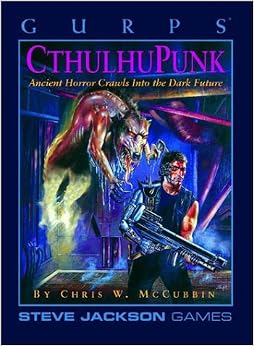
Image result for gurps cthulhupunkThird, 20 years ago this May, I GMed my first game for Erika and her best friend, Seanna Lea--both of whom still plays in most of my games to this day. That "Cthulhu 2000 AD" campaign was a modern-day Lovecraftian game using GURPS CthulhuPunk, and was my second attempt at running GURPS. I had first tried the system--briefly--in college, and it was the system of choice for the first regular gaming group that I joined after moving to Boston. I decided to use GURPS rather than Call of Cthulhu because I was more familiar with that system, and because I preferred to have more fully developed characters then was possible with CoC's very simple character generation. I made a number of mistakes, mostly in ensuring party cohesion, and in balancing "waking world" vs. Dreamlands adventures, but we all had fun over those 15 months. A couple of years later, I ran a one-shot for Erika and Seanna Lea's characters in order to provide them better closure than I had able to do before the campaign's end. (By then, I had also been running a GURPS fantasy campaign--"Adventures in Arcadayn"--for Erika, Seanna Lea, and another friend for a couple years, but that is, as they say, another story.)

Shortly after that final one-shot, I posted some of my notes on this campaign (and the previous one, which was also a Cthulhu game) to my gaming website. That was on Yahoo! Geocities at the time, and I migrated those notes to Wikispaces when I had to switch hosts some years later. By the time I migrated Thastygliax's Vault to Google Sites in 2014, I had so many different campaign archives to move that the GURPS Cthulhu games were among the lowest in priority, so they did not get moved at that time. While working on that migration, I discovered that many (but not all) of those pages could be found on the Internet Archive Wayback Machine*. That meant that I could still post a link to that content until I got around to posting it on my new site. I did so, but included a caveat about the Wayback Machine's archive not being 100% complete.

Then I didn't think about those pages again for a couple years, expect for the briefest of moments every time I opened the Vault's homepage. Those Cthulhu games are the oldest campaigns that I have listed there, so are at the top of the list of links. This past week, I finally took the time to add My GURPS Cthulhu Campaigns to the Vault, so that I could delete that annoying little caveat. It was while I was preparing those pages for their new home that I realized that I had started my "Cthulhu 2000 AD" campaign 20 years (and a few weeks) ago.

Erika and Seanna Lea are certainly open to me running more Lovecraftian games, evidenced by the fact that they've played in all three of my campaigns set in Green Ronin Publishing's Mythos-tainted Freeport: The City of Adventure. There is a chance, albeit a very slim one, that we may revisit their "Cthulhu 2000 AD" characters someday, for nostalgia's sake. But it would almost certainly be in a different game system, and might not have much continuity with the original campaign. The most obvious choice of system is GURPS Fourth Edition (which I own but have never had a chance to try out) but their characters would work just as well (if not better?) in the Buffy/Angel version of Unisystem.

Happy anniversaries, Erika and Seanna Lea!


* Another old project of mine that I found on the Wayback Machine was GURPS Sluggy Freelance, which I briefly posted about this past weekend after copying it to the Vault.